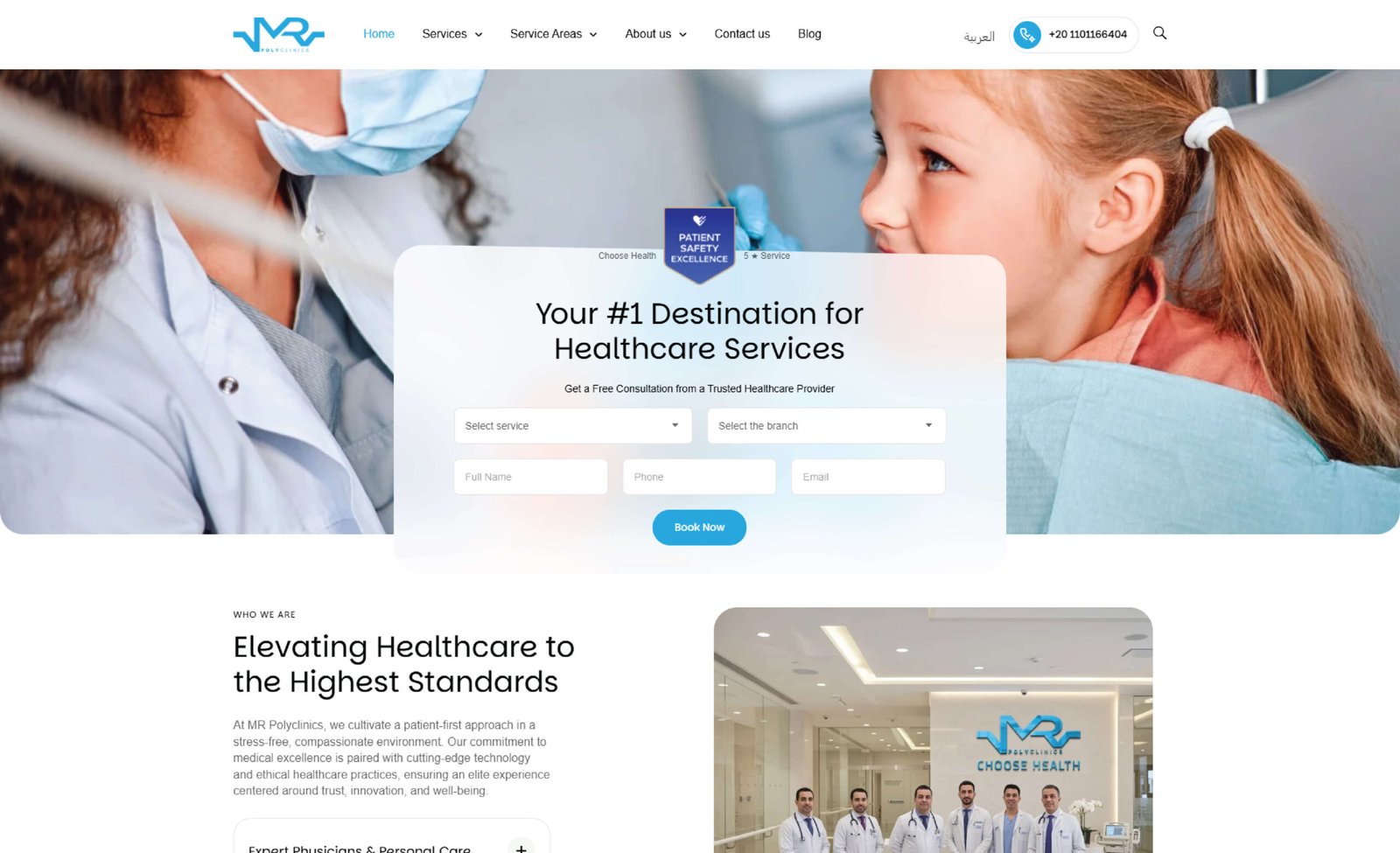
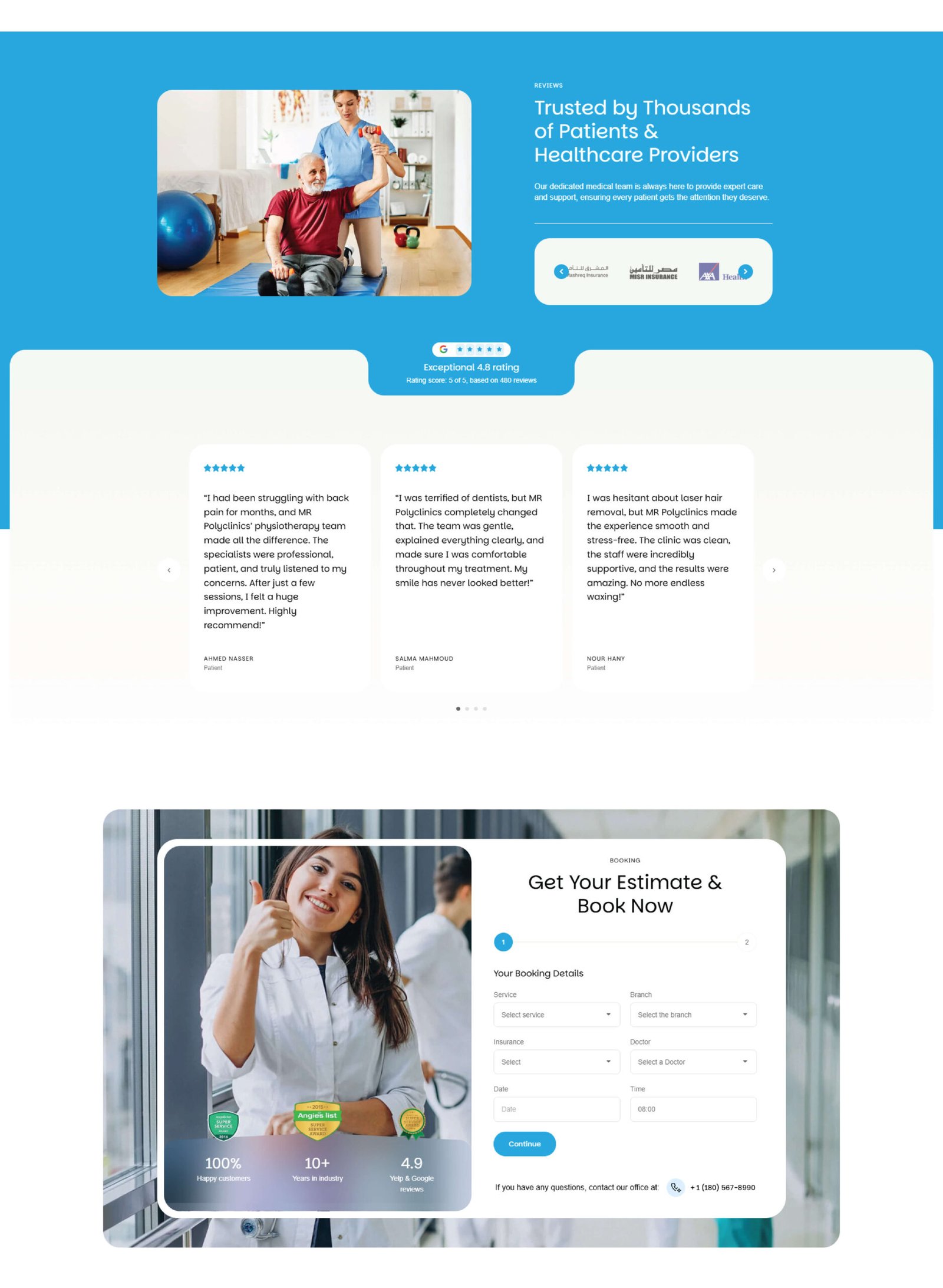
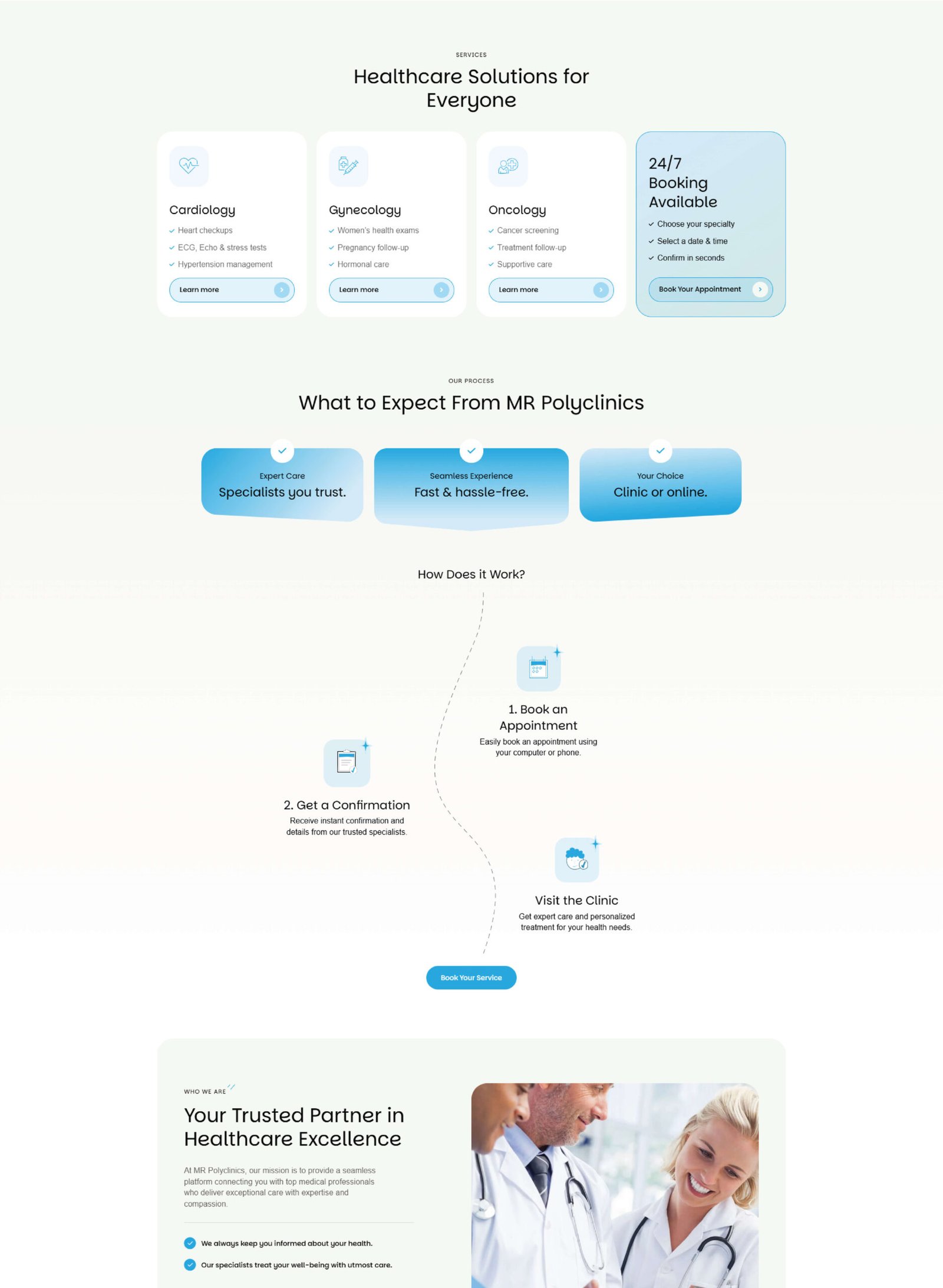
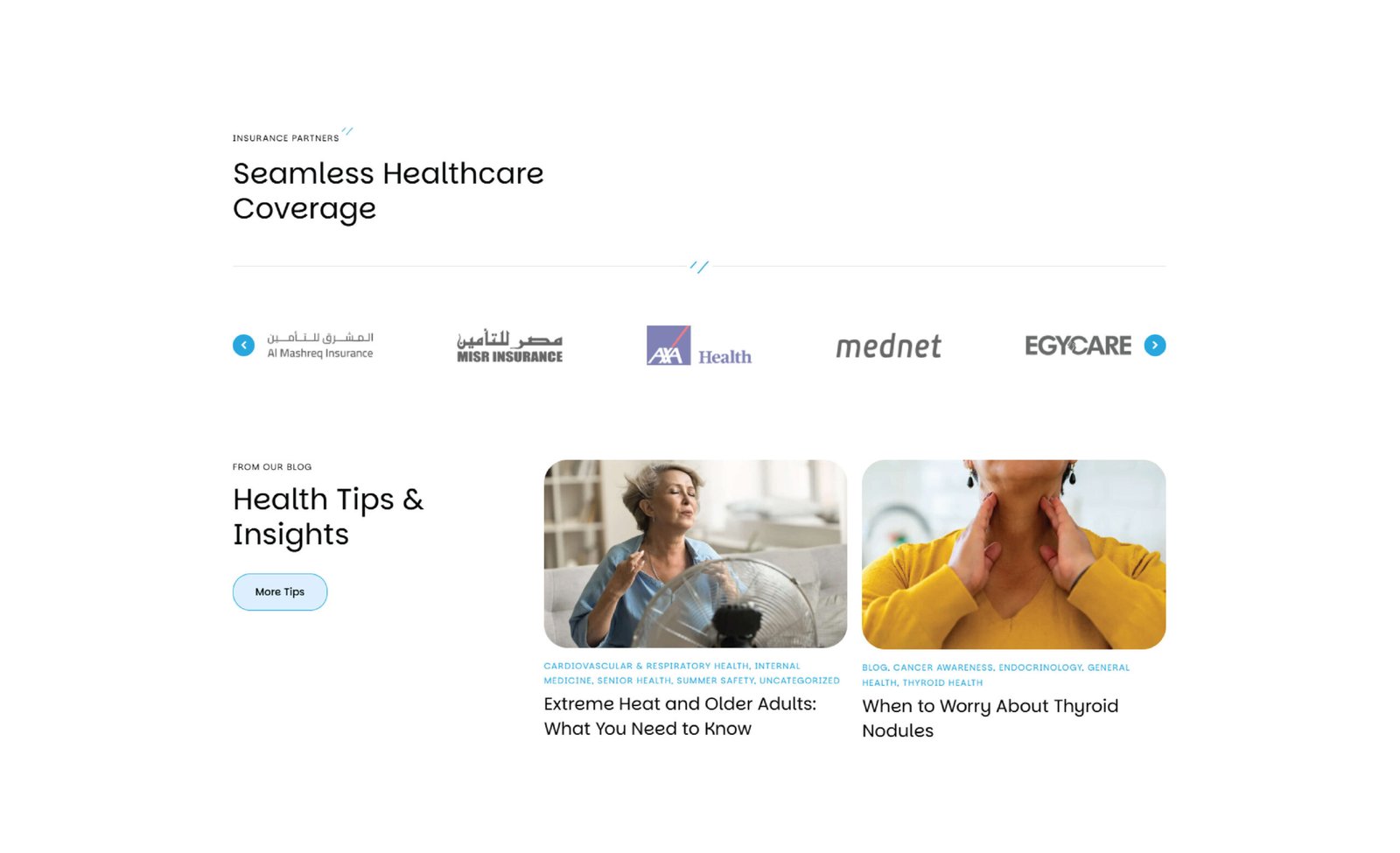
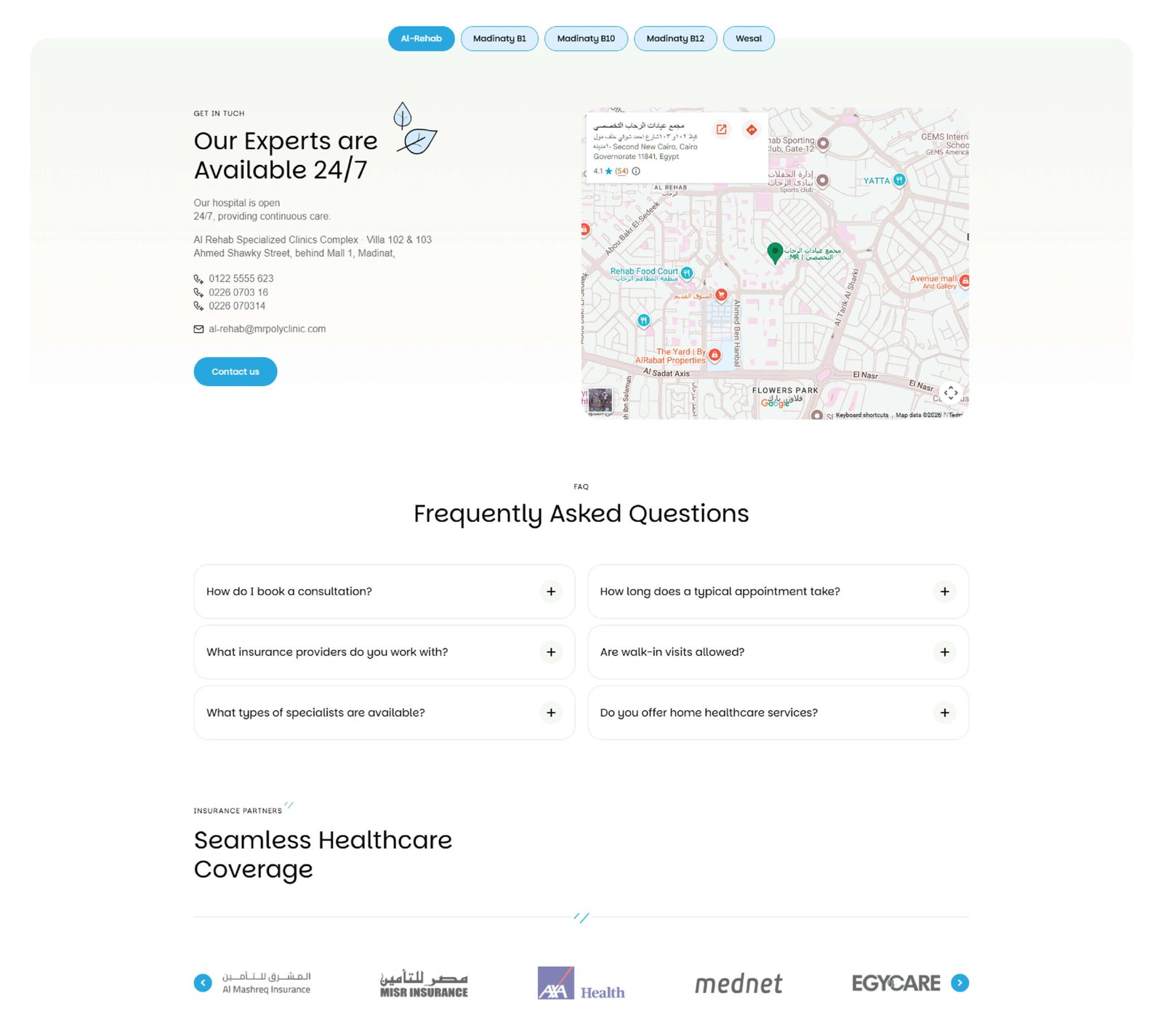
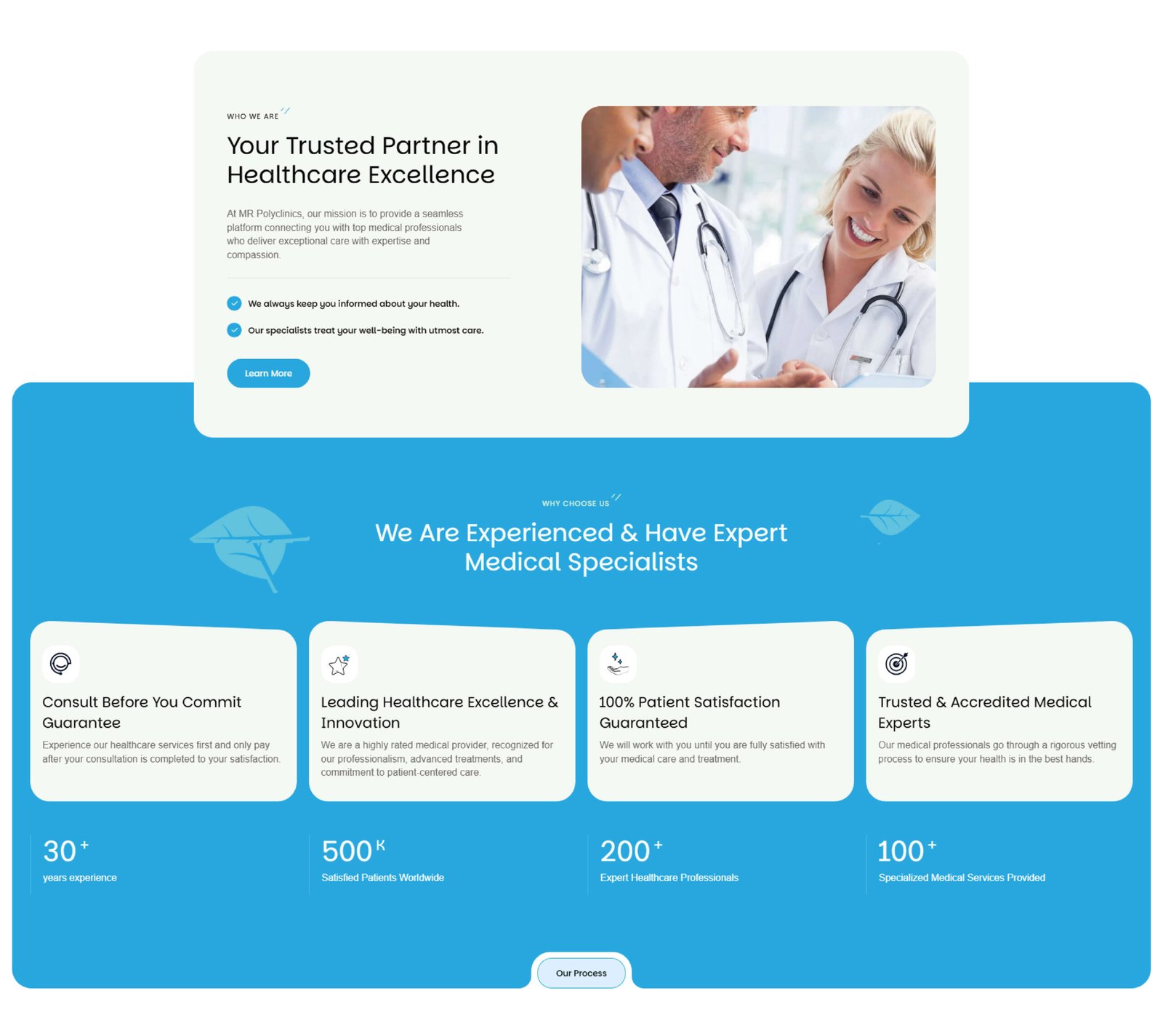
MR PolyClinics is a multi-branch healthcare provider offering comprehensive medical services across different specialties. The goal of this project was to design and develop a modern website that reflects the clinic’s professionalism, improves patient accessibility, and creates a seamless digital experience aligned with the brand’s medical standards.
User Interface (UI)
The user experience was designed to simplify how patients interact with healthcare information, ensuring clarity, speed, and ease of use at every step.
The design language is built on a balanced grid system, consistent spacing, and clear typography hierarchy. A calm and trustworthy color palette was selected to reinforce a sense of reliability and comfort, while maintaining a modern and accessible digital appearance.
User Experience (UX)
The user experience was designed to simplify how patients interact with healthcare information, ensuring clarity, speed, and ease of use at every step.
We structured the platform around clear user journeys, allowing visitors to quickly navigate between services, specialties, and key information without confusion. Content was organized using a logical hierarchy, making it easy to scan, understand, and act upon.
Special attention was given to reducing friction across the experience. Key actions such as exploring services, finding relevant information, and initiating contact are accessible within minimal steps, creating a smooth and efficient flow.
The new digital presence of MR PolyClinics reflects a more structured, professional, and patient-focused brand experience. The website successfully translates the clinic’s values into a clear and accessible platform that enhances communication and strengthens overall trust in the brand.
This transformation established a stronger foundation for MR PolyClinics’ online presence, improving how the brand is perceived and interacted with digitally. It supports long-term growth by presenting the clinic in a more modern, credible, and consistent way across all digital touchpoints.